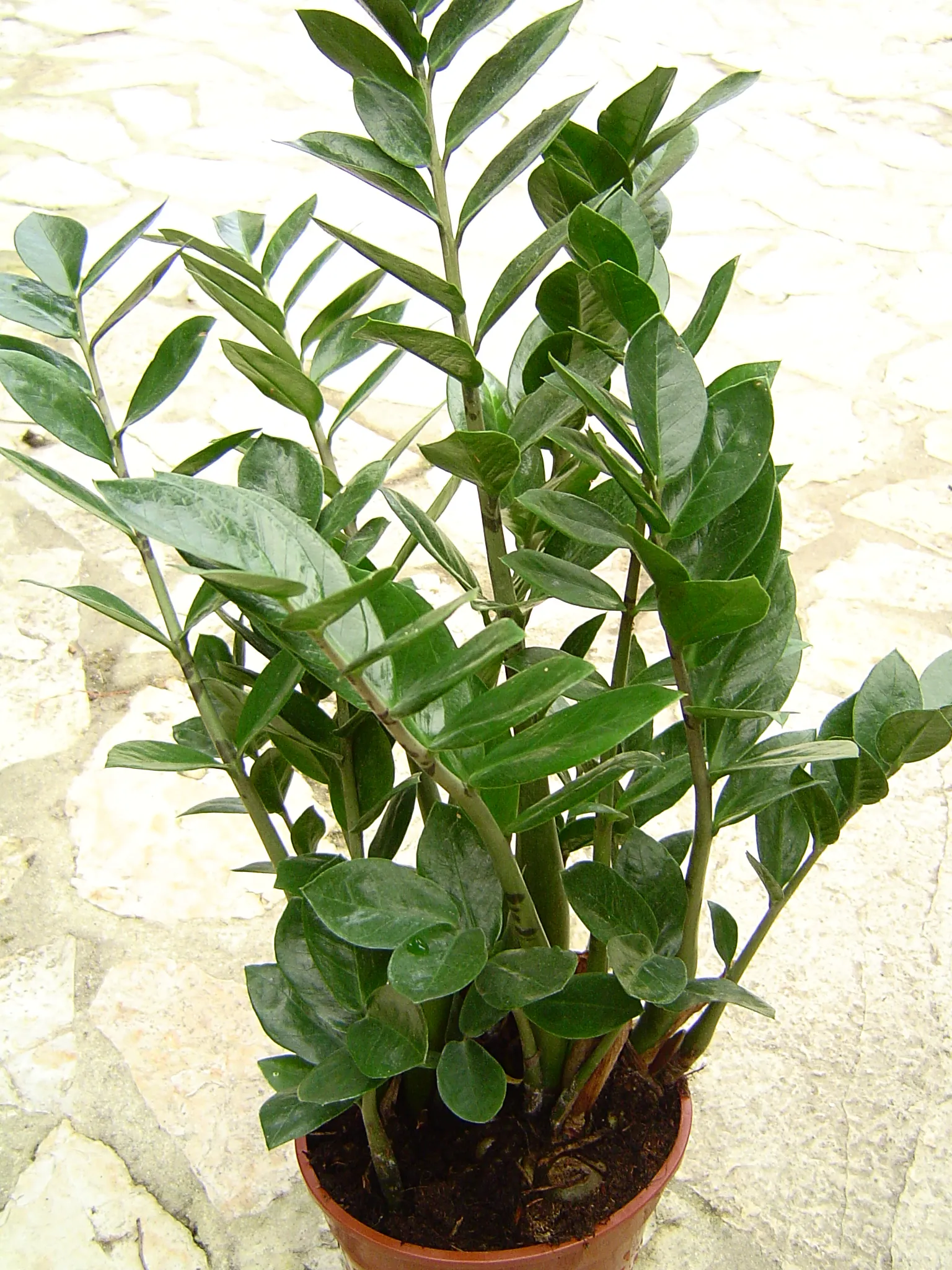
ZZ Plant
Zamioculcas zamiifolia
Complete care guide and energetic profile for Zamioculcas zamiifolia — the virtually indestructible ZZ plant.
Low to bright indirect
Every 2-3 weeks, drought tolerant
Any household level
15-28°C
The ZZ Plant is the ultimate low-maintenance houseplant, thriving on neglect in conditions that would defeat most other species. Zamioculcas zamiifolia is native to the dry grasslands and forests of eastern Africa, from Kenya to South Africa, where it endures long periods of drought by storing water and nutrients in thick, potato-like underground rhizomes. Its arching stems are lined with waxy, dark green leaflets that gleam as though freshly polished. The ‘Raven’ cultivar, with its near-black foliage, has become especially popular in recent years.
Light Requirements
Few houseplants are as genuinely adaptable to low light as the ZZ plant. It can survive in dimly lit hallways, interior offices with only fluorescent lighting, and north-facing rooms with little natural sun. Growth is slower in these conditions but the plant remains healthy and attractive. Bright indirect light produces faster, more vigorous growth. Avoid prolonged direct sunlight, which scorches the waxy leaves. The ZZ plant is one of the very few species you can place in a genuinely dark corner and expect it to do well.
Watering
The ZZ plant’s drought tolerance is not luck — it’s engineered. The rhizomes running horizontally beneath the soil are specialised storage organs that accumulate water, starches, and proteins during periods of rain, then draw on these reserves as conditions dry out. In eastern Africa, where the plant evolved, rain can be scarce for months at a time. The rhizomes are what allow the plant to simply wait it out.
Allow the soil to dry out completely between waterings — every two to three weeks in summer, once a month or less in winter. Soak the soil thoroughly, then let it drain. Yellow, mushy stems at the base are the unmistakable sign of overwatering — the rhizomes are rotting. If in doubt, wait. This plant is always better slightly too dry than too wet.
Humidity and Temperature
ZZ plants are unfussy about humidity and thrive in the typical range found in most homes without any supplemental moisture. Dry air from central heating doesn’t trouble them. The preferred temperature range is 15 to 28 degrees Celsius, though they can handle brief dips to 10 degrees without lasting damage. Keep away from cold draughts and avoid placing directly above radiators.
Araceae Family
One thing worth knowing: despite its unusual appearance, the ZZ plant is a member of the Araceae family — the same family as monstera, philodendron, and pothos. This means it shares the same basic root biology as other aroids: the roots need oxygen, and dense, waterlogged soil suffocates them. The rhizomes provide exceptional drought reserves, but the drainage principles are the same as any aroid. A fast-draining mix — one part peat-free compost, one part perlite, one part coarse sand — and a pot with drainage holes are non-negotiable.
Feeding and Soil
Feed once a month in spring and summer at half strength. No feeding in autumn or winter. Over-fertilising causes salt buildup and leaf tip burn. Repot every two to three years or when rhizomes begin pushing against the sides of the pot.
Common Issues
- Yellow, mushy stems — Rhizome rot from overwatering. Unpot, trim rotted rhizomes, repot in dry fresh mix.
- Leaf drop — Usually overwatering. Rarely, severe dehydration.
- Slow growth — Normal, especially in low light. ZZ plants are naturally unhurried.
- Brown leaf tips — Over-fertilisation or extremely dry air. Reduce feeding.
- Leggy, stretched stems — Insufficient light over a long period. Move to a slightly brighter spot.
- Mealybugs — Uncommon. Wipe with cloth dampened in diluted neem oil.
The ZZ plant is genuinely hard to kill and rewards even the most forgetful owner with consistently handsome foliage year after year. Understand its rhizome biology and you’ll understand why it asks so little and delivers so much.
Growing More ZZ Plant
ZZ Plant can be propagated by division or leaf propagation. Step-by-step guides with the biology explained:
Troubleshooting ZZ Plant
If your ZZ Plant is showing yellow leaves, brown tips, drooping, root rot, leggy growth, or signs of pests — the troubleshooting hub has biology-first diagnosis guides for every common problem.
Go to troubleshooting hubDiscover the spiritual side of ZZ Plant
ZZ Plant resonates with Earth energy, the Root (Muladhara) chakra, and is ruled by Pluto. Explore the full energetic profile, ideal placement, and spiritual properties in the Mist collection.
View Energy Profile