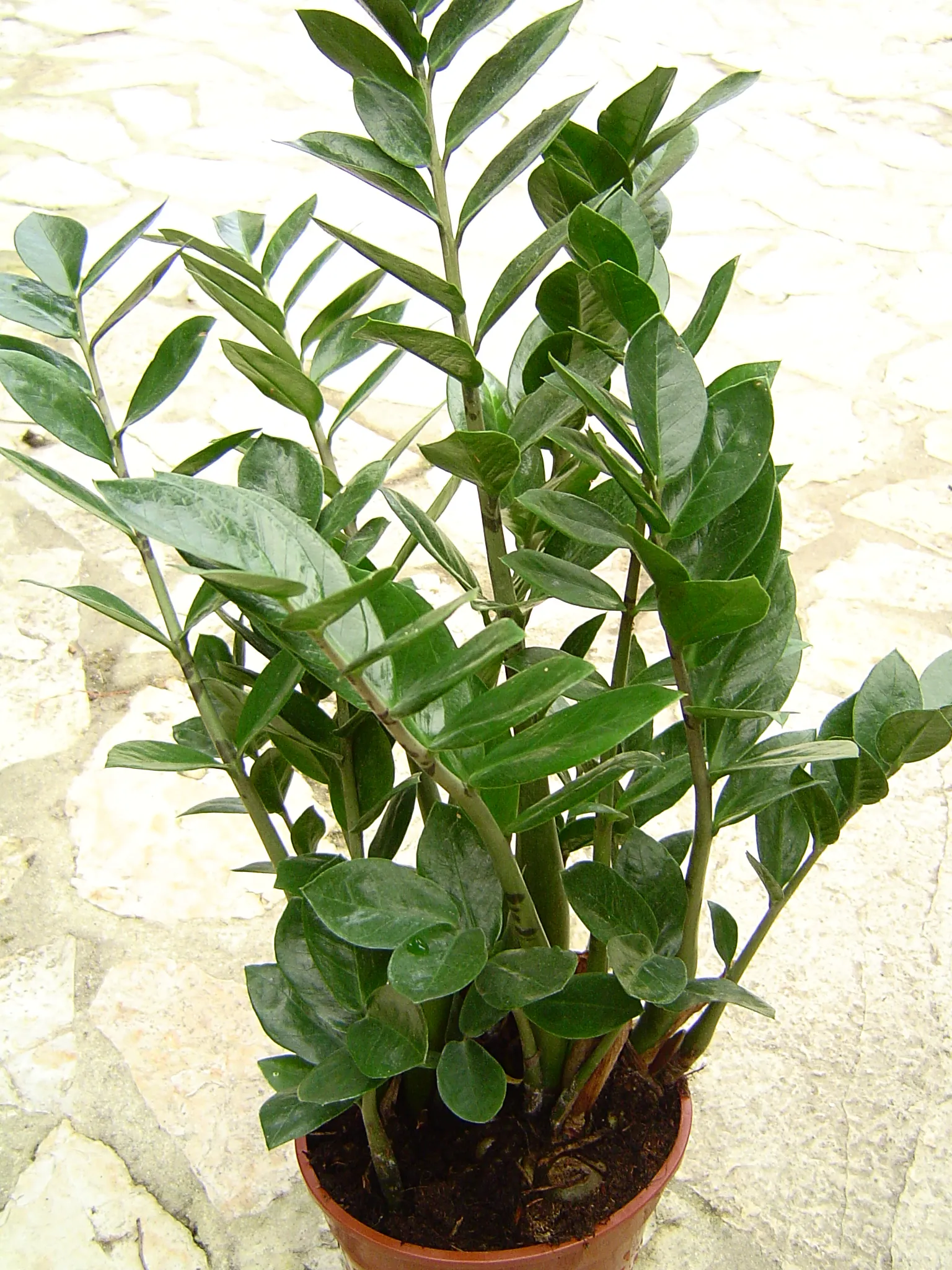
ZZ Plant
Earth
Pluto
Root (Muladhara)
Hallway or home office
Dark moon
Dark corners or north-facing rooms
Obsidian
Obsidian is volcanic glass — formed in fire and cooled into something that reflects everything it faces without softening it. Like the ZZ plant, it thrives in the dark. Place obsidian beside the ZZ plant during shadow work or dark moon practices to amplify the capacity to see clearly without flinching.
Explore crystals →On the dark moon, when the sky is at its most absent and the energy is most deeply internal, sit in the room with the ZZ plant in low light or candlelight. Ask yourself one question that you have been avoiding. Do not answer it. Simply let it exist in the space with the plant, which has been surviving on very little light for a very long time. Return to the question over the following lunar cycle as the light returns.
The ZZ plant is native to the grasslands and dry forests of East Africa, from Kenya to South Africa, where seasons of drought are a given. In cultures that developed deep knowledge of drought-resistant plants, the zamioculcas represents the wisdom of storage and strategic patience — of accumulating resources during good times to sustain life through difficult ones.
Pluto governs death and rebirth, the underworld, and the slow, inexorable process of transformation that happens beneath the surface. In Western esoteric plant correspondence, Pluto-ruled plants are associated with shadow work, the composting of the old self, and the emergence of something new that could not have existed without what had to end.
The ZZ plant became a cultural symbol of resilience during the 2010s houseplant revival — chosen deliberately by people who had failed with other plants, who worked long hours, who lived in dark apartments. This collective identification with a plant that survives abandonment and comes back glossy gave it a modern folk meaning: you can be depleted and still find a way to continue.
The ZZ plant stores everything. Water, starches, proteins — all of it goes into the rhizomes underground, accumulating patiently against the long dry season that always comes. This is Pluto in its most essential expression: the slow, subterranean work of transformation that happens out of sight, underground, in the dark. Pluto does not hurry. It does not surface until the process is complete. The root chakra, in Plutonian terms, is not simply about feeling safe — it is about the deepest layer of identity, the part that remains when everything else is stripped away. Shadow work — the practice of bringing unconscious material into conscious awareness — belongs to this territory. The ZZ plant is the ideal companion for this kind of work precisely because it asks almost nothing and survives almost anything. It does not need you to be performing or presenting or even particularly functional. It will be exactly as glossy in the corner of a difficult month as it was in the corner of a good one. There is something stabilising about that constancy. The dark moon is its moment: the sky entirely dark, the energy turned entirely inward, the invitation to go down into the ground rather than up into the light. Work with the ZZ plant in this phase and in these rooms — the hallway that marks the threshold of home, the office where the hardest decisions are made — and let it be a reminder that what endures is not the bright and visible but the deeply rooted.
Science-led care for ZZ Plant
Explore the evidence-based care guide — light requirements, watering schedule, humidity, soil mixes, and troubleshooting common problems.
Read the Care Guide