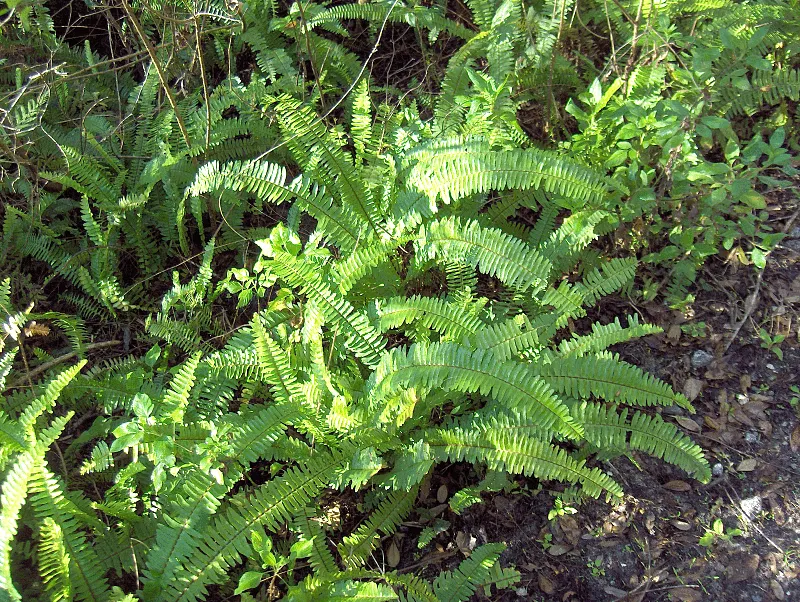
Boston Fern
Nephrolepis exaltata
Complete care guide and energetic profile for Nephrolepis exaltata — the lush, arching Boston fern.
Bright indirect to filtered
Keep consistently moist
Above 60%
16-24°C
The Boston Fern has been one of the most beloved indoor ferns since the Victorian era, when it was first discovered as a naturally occurring mutation of the sword fern in a shipment of plants to Boston in 1894. Nephrolepis exaltata ‘Bostoniensis’ produces long, gracefully arching fronds densely packed with bright green pinnae (leaflets), creating a lush, feathery mound that looks stunning in a hanging basket or on a pedestal. It is non-toxic and safe for homes with pets and children.
Light Requirements
Boston Ferns evolved on the forest floor — shaded by the canopy, receiving only filtered, dappled light. A north-facing window or a spot a few feet back from an east-facing one closely mirrors this. Direct afternoon sun will scorch the delicate pinnae, turning them brown and papery. In too little light, fronds become sparse and pale, and new growth slows. If inner fronds are yellowing and dropping while outer ones stay healthy, the plant likely needs more light reaching its centre.
Watering
Unlike succulents or aroids, Boston Ferns have fine, fibrous roots that lack any water-storing structures. If the soil dries out completely, those root hairs desiccate quickly and die — crippling the plant’s ability to take up water even once you water again. Consistent, even moisture is not optional for this fern; it’s a biological requirement.
Keep the soil evenly moist, like a wrung-out sponge. Water every few days in warm weather and slightly less in winter, always checking the top half-inch before watering.
Water quality matters significantly here. Boston Ferns are sensitive to the chlorine and fluoride found in tap water. The plant cannot process these chemicals, so its vascular system carries them to the tips of the pinnae — the furthest point from the roots — where they accumulate to toxic concentrations and cause cell death. The result is the brown, crispy tips that owners often mistake for underwatering. Rainwater or filtered water produces noticeably better results. Bottom-watering works well for hanging baskets.
Humidity and Temperature
Humidity is the single biggest factor in keeping a Boston Fern looking its best. When indoor air is dry, the Vapor Pressure Deficit between the moisture-saturated tissue inside the leaf and the drier surrounding air creates a strong pull — drawing water vapor out through the frond’s stomata faster than the fibrous roots can replace it. The characteristic brown, crispy frond tips are the direct result.
Aim for sixty per cent humidity or higher. A humidifier running nearby is the most reliable solution. Placing the plant in a naturally humid room such as a well-lit bathroom also works. Misting provides only very temporary relief and is not sufficient on its own. Temperature should stay between 16 and 24 degrees Celsius — these ferns dislike heat above 27 degrees nearly as much as cold below 10.
Feeding and Soil
Feed every two to four weeks during the growing season with a balanced liquid fertiliser at half strength. Over-fertilising salts accumulate in the soil and cause further browning of frond tips. The ideal potting mix is moisture-retentive yet airy: two parts peat-free compost, one part perlite, one part coco coir or fine orchid bark. The root system is dense and fibrous — repot every one to two years. Choose a container only slightly larger than the current one, as oversized pots hold excess moisture and create the damp conditions these fine roots cannot handle.
Common Issues
- Brown, crispy frond tips — Low humidity or tap water chemicals. Increase moisture and switch to filtered or rainwater.
- Yellowing inner fronds — Some shedding of older fronds is natural. Widespread yellowing suggests insufficient light or nutrients.
- Massive leaf drop — Triggered by sudden environmental change: moving the plant, a temperature swing, or a missed watering. Keep conditions as consistent as possible.
- Pale, limp fronds — Overwatering or waterlogged soil. Check drainage and allow the top layer to dry slightly before the next watering.
- Scale insects — Small brown bumps on frond stems. Remove by hand and treat with neem oil. Avoid chemical insecticides — ferns are sensitive to many sprays.
- Messy leaf litter — Boston Ferns naturally shed old pinnae. Place them where the mess is manageable, or use a tray beneath.
The Boston Fern rewards attentive care with a cascade of lush, arching fronds that bring a genuine sense of the forest indoors. Place it somewhere you can tend to it regularly — this is not a plant that thrives on neglect, but it gives back generously to those who pay attention.
Growing More Boston Fern
Boston Fern can be propagated by division. Step-by-step guides with the biology explained:
Troubleshooting Boston Fern
If your Boston Fern is showing yellow leaves, brown tips, drooping, root rot, leggy growth, or signs of pests — the troubleshooting hub has biology-first diagnosis guides for every common problem.
Go to troubleshooting hubDiscover the spiritual side of Boston Fern
Boston Fern resonates with Water energy, the Sacral (Svadhisthana) chakra, and is ruled by Moon. Explore the full energetic profile, ideal placement, and spiritual properties in the Mist collection.
View Energy Profile