Bird's Nest Fern
Asplenium nidus
Complete care guide and energetic profile for Asplenium nidus — the elegant, rosette-forming bird's nest fern.
Medium indirect
Keep soil lightly moist
Above 50%
16-27°C
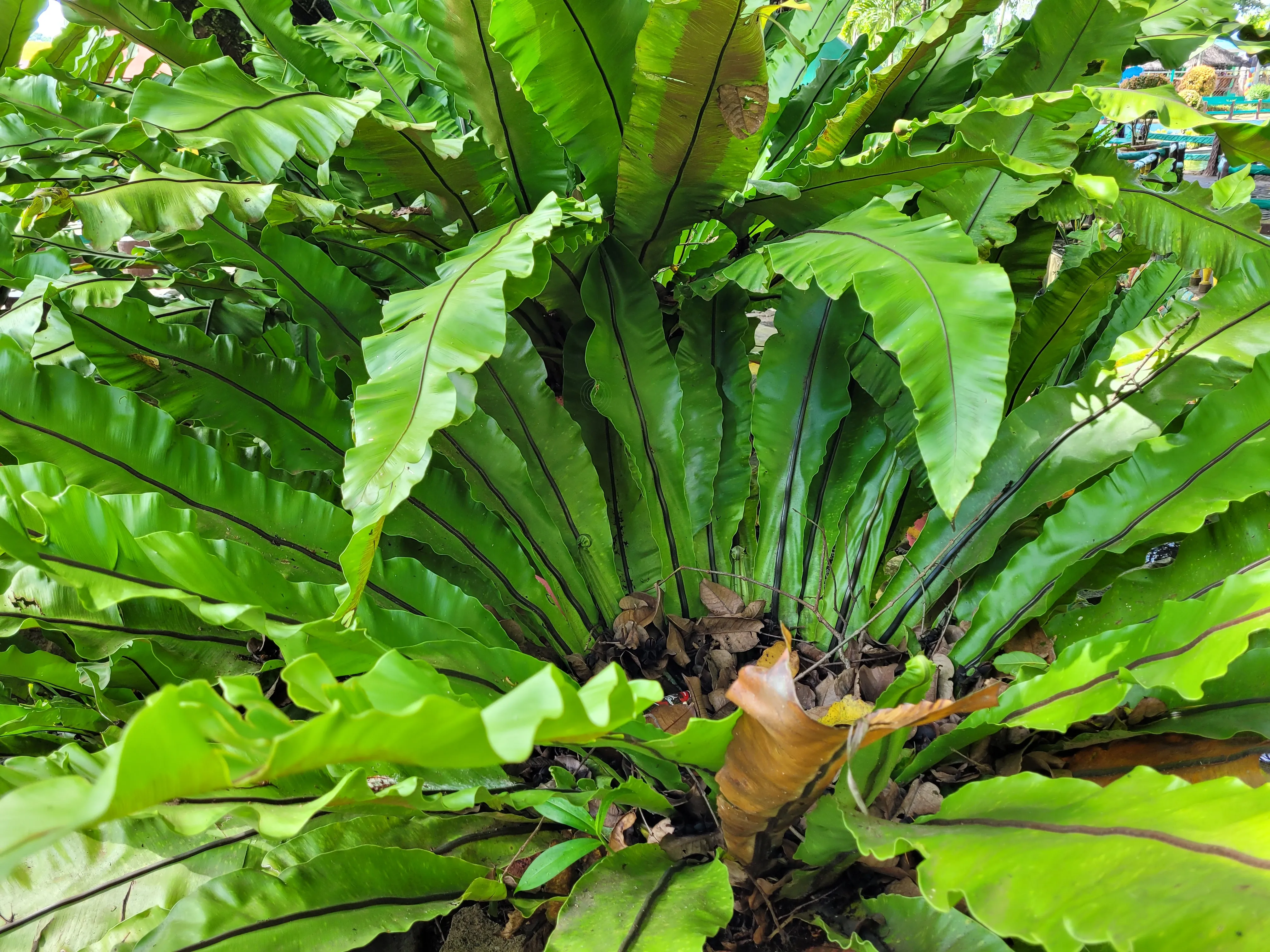
The Bird’s Nest Fern is a striking epiphytic fern that forms a rosette of broad, undivided fronds emerging from a central, fuzzy crown that resembles a bird’s nest. In its native habitat across tropical Asia, Australasia, and East Africa, Asplenium nidus grows perched on tree trunks and in rock crevices, catching falling debris in its funnel-shaped centre to create its own rich compost. Indoors, it brings an elegant, tropical feel to any room with its bright apple-green fronds and gently rippled edges. It is non-toxic and entirely safe around pets and children.
Light Requirements
Bird’s Nest Fern is an epiphyte — it spends its life anchored to tree trunks rather than rooted in soil. High in the tropical canopy, it receives soft, filtered, ambient light rather than direct sun. Indoors, that translates to medium indirect light: the kind of gentle brightness found in the interior of a well-lit room, or beside a north-facing window.
Direct sunlight should be avoided entirely. The fronds never evolved defences against it and will bleach and scorch quickly. In too little light, growth slows and fronds may become lankier and less vibrant. The ideal spot replicates what the plant knows — soft, diffuse brightness, no harsh directional beams.
Watering
As an epiphyte, the Bird’s Nest Fern’s roots evolved primarily as holdfasts — structures designed to grip tree bark rather than draw from deep soil moisture. They are adapted to absorb water quickly during rain showers and then dry out rapidly in the open air. In dense, continuously wet potting mix, they suffocate.
The most important watering rule with this fern is to keep soil lightly moist but never saturated, and — critically — never water directly into the central crown. In the wild, the nest-shaped rosette functions as a catchment system for water and organic debris, but outdoors this drains and evaporates quickly. Indoors, without natural airflow, water pooling in the crown creates a stagnant, oxygen-starved environment where fungal pathogens like Phytophthora and Rhizoctonia establish rapidly and attack the soft growing tissue at the plant’s heart.
Always water around the outer edge of the pot. Use room-temperature filtered or rainwater — the roots are sensitive to the chlorine and dissolved minerals in hard tap water.
Humidity and Temperature
The Bird’s Nest Fern’s need for elevated humidity comes down to physics. When indoor air is dry, the Vapor Pressure Deficit (VPD) — the difference between moisture-saturated air inside the leaf and drier air outside — creates a strong pull that draws water vapor out through the stomata at pace. Because this fern’s epiphytic roots are not designed to draw from deep groundwater reserves, the plant relies heavily on ambient moisture to slow that evaporation rate and stay hydrated. At fifty per cent humidity or below, frond edges brown and crisp.
A bathroom with natural light is often the ideal location — the steam from showers raises ambient humidity naturally. A humidifier is the most reliable alternative. Temperature should remain between 16 and 27 degrees Celsius, stable and draught-free. Heating vents dry the surrounding air and should be avoided.
Feeding and Soil
Feed monthly during the growing season with a balanced liquid fertiliser at half or quarter strength. Ferns are light feeders — excess fertiliser burns frond edges and can damage roots. Apply to the soil only, never to the fronds or crown.
The potting mix should mirror the epiphytic environment the plant evolved in: loose, airy, and rich in organic matter. Two parts peat-free compost, one part perlite, and one part fine orchid bark provides good structure and fast drainage without compacting around the roots. Dense, heavy soil eliminates the airflow the roots need and holds moisture far too long. Repot every two years or when roots fill the pot.
Common Issues
- Brown, crispy frond edges — Low humidity. Increase moisture in the air around the plant.
- Yellow fronds — Overwatering or compacted soil. Check drainage and reduce watering frequency.
- Soft, rotting centre — Water has accumulated in the rosette crown. Water around the base, never into the centre.
- Pale, washed-out fronds — Too much light. Move to a shadier position.
- Scale insects — Can appear on midrib and frond undersides. Remove with a damp cloth and treat with diluted neem oil. Avoid chemical pesticides on ferns.
- Slow growth — Normal, especially in winter. Ensure adequate humidity and light for steady development.
Broad, undivided fronds, a forgiving temperament relative to other ferns, and a natural affinity for bathrooms — the Bird’s Nest Fern is one of the most rewarding tropical plants you can grow indoors.
Growing More Bird's Nest Fern
Bird's Nest Fern can be propagated by division. Step-by-step guides with the biology explained:
Troubleshooting Bird's Nest Fern
If your Bird's Nest Fern is showing yellow leaves, brown tips, drooping, root rot, leggy growth, or signs of pests — the troubleshooting hub has biology-first diagnosis guides for every common problem.
Go to troubleshooting hubDiscover the spiritual side of Bird's Nest Fern
Bird's Nest Fern resonates with Water energy, the Heart (Anahata) chakra, and is ruled by Venus. Explore the full energetic profile, ideal placement, and spiritual properties in the Mist collection.
View Energy Profile