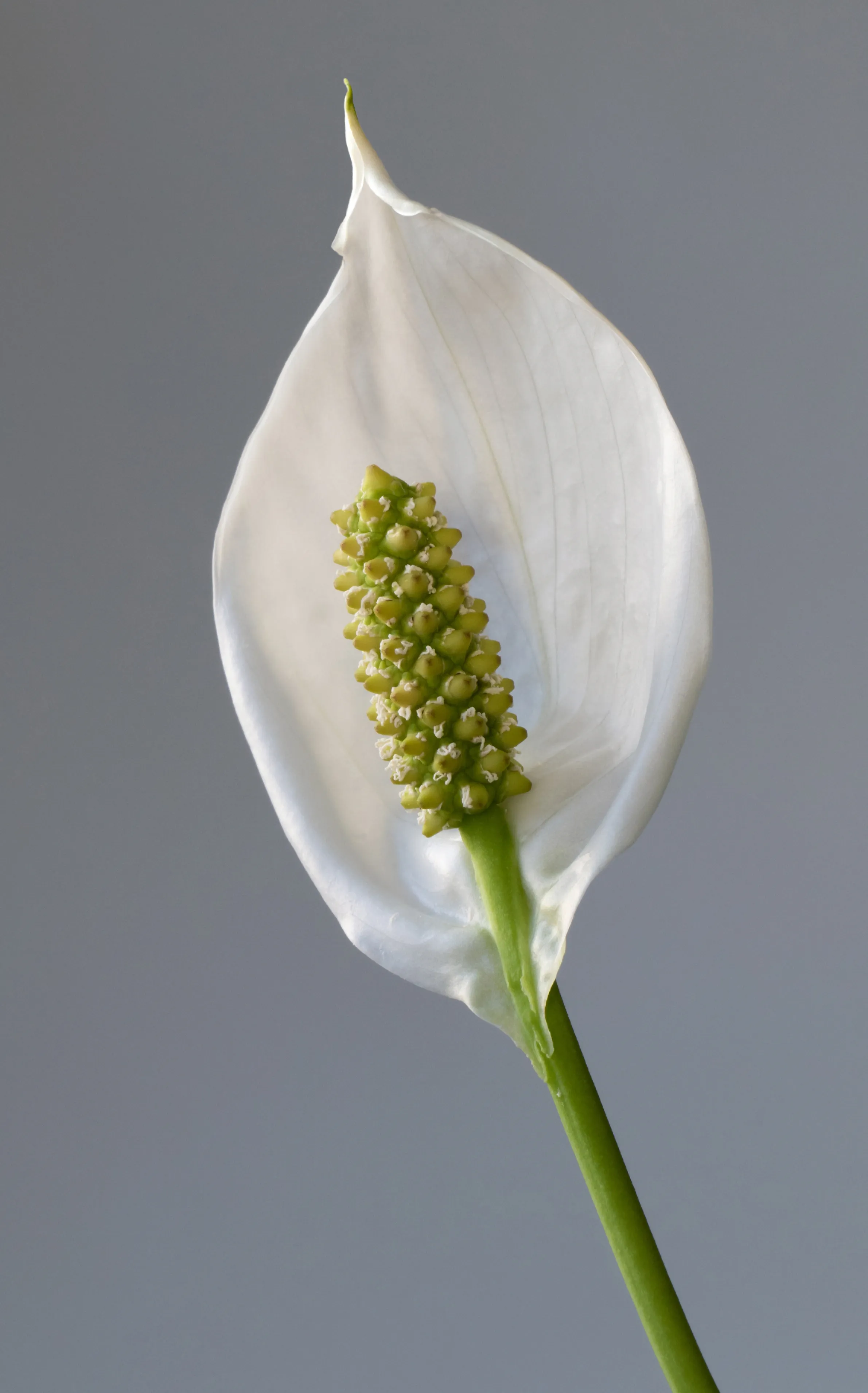
Peace Lily
Water
Moon
Crown (Sahasrara)
Bedroom or meditation space
Full moon
North or east-facing rooms
Selenite
Selenite is named for Selene, the moon goddess, and shares the peace lily's lunar, crown-chakra frequency. It does not need cleansing and is said to maintain a permanently clear, high vibration. Place a selenite wand beside the plant in a bedroom or meditation space to amplify the quality of stillness and divine connection.
Explore crystals →The peace lily blooms in white — the colour of completion, of what has been distilled to its essence. When grieving or navigating a significant ending, sit with the peace lily in the late evening. Speak aloud to what you are releasing. Let the plant hold the weight of the unsaid. Water it after — slowly, gently — as an act of tending yourself through transition.
The white spathe of the peace lily has made it the most commonly given plant at funerals and memorials in many Western countries. Its association with mourning is ancient — white flowers in numerous cultures represent the soul, purity, and the threshold between life and death.
White flowers hold sacred status in Hindu devotional practice. While the peace lily specifically is modern in India, white-flowering plants are offered to lunar deities such as Chandra and to ancestors during shraddha ceremonies — the white colour representing the light beyond form.
In Buddhist teaching, the lotus — which the peace lily visually resembles — rises from muddy water into a pure white bloom as a symbol of the mind emerging from suffering into clarity. The peace lily carries this resonance for practitioners who keep it in meditation rooms as an altar plant.
The peace lily blooms when it is ready. You cannot force it. You can give it enough light, keep the soil correctly moist, feed it appropriately — and then you wait. The white spathe opens in its own time, and when it does it creates something quietly extraordinary in a room: a presence of stillness that is hard to name but easy to feel. The crown chakra is the point of connection between the individual consciousness and the larger field — the place where, in contemplative traditions, the boundary between self and the divine grows permeable. Water flows through this plant as it flows through all emotional experience: it absorbs, it purifies, it passes on. The Moon governs cycles and the tides of feeling; it asks us to trust that what empties will fill again. Grief, transition, the courage required to let something end — the peace lily tends these experiences with a presence that neither dramatises nor dismisses. It simply holds. Place it in a meditation space where you do your most honest inner work, or in a bedroom where the quality of stillness it carries can support deep sleep and genuine rest. Its willingness to revive dramatically after wilting — standing fully upright within hours of water — is itself a teaching about the resilience available on the other side of surrender.
Science-led care for Peace Lily
Explore the evidence-based care guide — light requirements, watering schedule, humidity, soil mixes, and troubleshooting common problems.
Read the Care Guide